

A shift that sounds quite similar to a big narrative twist in a long-running corporate drama is created when billionaires talk about purpose rather than profit. Something more profound is happening beneath the gleaming boardroom surfaces when people who once ran their empires with unwavering focus start talking about meaning, community effect, and shared responsibility. Their language becomes quite clear: their goals are no longer defined just by their financial situation. They start focusing on issues that were previously the domain of academics, activists, and nonprofit executives.

The shift usually starts when the joy of pursuing wealth has diminished considerably. Many entrepreneurs are looking for a new emotional anchor after they have achieved incredible financial success. Their objectives begin to shift from acquisition to contribution, reflecting the idea that passion outweighs profit. Steve Jobs was a prime example of this way of thinking; he was motivated not by financial gain but rather by the desire to create goods that were incredibly efficient, creative, and intuitive. Despite the enormous success that followed, that emotional north star started to hold more appeal than a bank sheet. Leaders in all industries begin to prioritize legacy over liquidity, a change that is not exclusive to digital pioneers.
Key Themes Behind the Purpose‑Driven Billionaire Shift
| Category | Insight |
|---|---|
| Definition of Purpose | A broader mission beyond financial gain, often tied to social change |
| Primary Motivators | Fulfillment, legacy, strategy, public pressure, activism |
| Business Impact | Higher engagement, stronger loyalty, improved innovation |
| Consumer Reaction | Preference for ethical brands, willingness to pay more |
| Criticism | Skepticism about intentions, concerns about PR masking problems |
| Notable Example | American Standard partnering with Bill & Melinda Gates Foundation |
| Societal Effect | Increased expectations for responsible leadership |
| Reference Source |
Additionally, some billionaires find that purpose is a very effective strategic tool. A company’s internal culture can be changed by integrating a sense of mission, which frequently creates a positive vibe that is especially helpful for teams trying to find alignment in a difficult market. This is seen from the change at American Standard. The company was able to enhance staff morale, which had been declining, and increase earnings dramatically by collaborating with the Bill & Melinda Gates Foundation on the Flush for Good initiative. Employees naturally stood and cheered when the program was presented, demonstrating how meaning can spark excitement in ways that numbers cannot. The campaign became an example of how doing the right thing can result in results that are noticeably enhanced across numerous dimensions, and the shared commitment restored optimism.
A culture of invention can also be fostered by purpose. Employees’ creative drive increases when they feel their work makes a difference in people’s lives. They become more adaptable in fixing problems and much more driven to improve goods or services. Even at businesses whose goods cannot change the course of world health, a shared dedication to enhancing the lives of consumers fosters an environment where tiny gestures of kindness add up to something revolutionary. A team with a same goal becomes more resilient, passionate, and clear.
By raising expectations, consumers—especially younger ones—reinforce this change. Studies across industries show that consumers are prepared to pay more—sometimes much more—for goods from businesses that exhibit sustainability or social responsibility. Consumers desire sincerity, openness, and respect. They can tell right away when they are being treated more like transactional objects than like cherished human beings. On average, companies that put a high priority on providing outstanding customer service earn almost six times as much as their rivals. This dynamic highlights a paradox that is becoming more and more clear: putting humanity first can increase profit while pursuing profit alone can limit it.
This optimistic story does not, however, develop without doubt. Many billionaire-led purpose efforts, according to critics, serve mainly as image management. Selecting the language of purpose can act as a buffer against criticism during times of increased scrutiny, greatly lessening its impact. According to some analysts, focusing on mission might divert attention from injustices, taxation, or labor policies that need for more extensive structural change. Despite their discomfort, these issues are essential to comprehending the larger picture. Corporate responsibility must be reflected in genuine action, not only in narratives.
When contrasting leaders who embrace purpose truly with those who do so casually, the tension becomes apparent. Some CEOs only discuss impact amid crises or customer boycotts, which raises doubts among onlookers about their motivations. Others regularly allocate resources, proving through long-term investments that their purpose-driven emphasis is not performance-driven. The public distinguishes between these two groups more and more, rewarding businesses that demonstrate consistent commitment and criticizing those that just make token gestures of accountability.
The larger cultural context also encourages billionaires to use language that is driven by purpose. There is limited room for leaders to function without exhibiting understanding of collective issues in light of the growing discussions surrounding inequality, housing affordability, public health, and climate danger. Public sensitivity to business conduct increased during the epidemic due to remote labor, economic instability, and changing values. Customers grew more knowledgeable, vocal, and inclined to select companies that share their values. In this situation, a business that comes across as unconcerned runs the risk of losing customers quickly, and even the wealthiest people are influenced by this pressure.
Furthermore, these billionaires’ internal motivations frequently change as they get older, more experienced, and more exposed. When financial stability is assured, many CEOs start to see their power as a chance—and occasionally a duty—to address issues that governments and nonprofit organizations find difficult to handle. Personal missions include worldwide sanitation, medical research, educational change, and climate innovation. The excitement of a new acquisition or financial achievement is surpassed by a desire to make a significant difference. These people want to make a lasting impact outside of their industry through their charity endeavors.
However, there are significant issues when profit and mission are combined. Can one truly pursue both, or will one always take precedence over the other? According to the examples, when purpose is carried out with integrity, it improves rather than detracts from company success. Businesses with defined missions tend to draw in highly engaged customers, partners who see long-term value, and devoted workers. This alignment creates a loop where a positive culture drives financial success by lowering turnover, increasing retention, and fostering innovation.

Amazon eero 6 mesh wifi add-on extender - Add up to 1,500 sq. ft. of Wi-Fi 6 coverage. Required eero mesh wifi system not included
$79.99 (as of June 2, 2026 00:41 GMT +00:00 - More infoProduct prices and availability are accurate as of the date/time indicated and are subject to change. Any price and availability information displayed on [relevant Amazon Site(s), as applicable] at the time of purchase will apply to the purchase of this product.)
Blink Mini 2K+ (newest model) – Plug-in Home & Pet Indoor Security Camera with 2K video resolution, night vision, enhanced audio, motion detection – 1 camera (Black)
$25.99 (as of June 2, 2026 00:41 GMT +00:00 - More infoProduct prices and availability are accurate as of the date/time indicated and are subject to change. Any price and availability information displayed on [relevant Amazon Site(s), as applicable] at the time of purchase will apply to the purchase of this product.)
Ring Floodlight Cam Wired Plus (newest model), Outdoor home or business security with motion-activated 1080p HD video and floodlights, White
$179.99 (as of June 2, 2026 00:41 GMT +00:00 - More infoProduct prices and availability are accurate as of the date/time indicated and are subject to change. Any price and availability information displayed on [relevant Amazon Site(s), as applicable] at the time of purchase will apply to the purchase of this product.)
Ring Battery Doorbell Plus (newest model), Retinal 2K with wide-angle video, up to 6x Enhanced Zoom, Night Vision, and Quick Release Battery Pack, Nickel Silver
$179.99 (as of June 2, 2026 00:41 GMT +00:00 - More infoProduct prices and availability are accurate as of the date/time indicated and are subject to change. Any price and availability information displayed on [relevant Amazon Site(s), as applicable] at the time of purchase will apply to the purchase of this product.)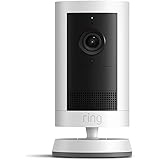
Ring Outdoor Cam Plus, Battery (newest model), Home or business security, Wide-Angle 2K Video with Ring Vision, Low-Light Sight for full-color night vision, Mount-Anywhere Versatility, White
$99.99 (as of June 2, 2026 00:41 GMT +00:00 - More infoProduct prices and availability are accurate as of the date/time indicated and are subject to change. Any price and availability information displayed on [relevant Amazon Site(s), as applicable] at the time of purchase will apply to the purchase of this product.)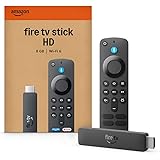
Amazon Fire TV Stick HD (newest model), free & live TV, Alexa Voice Remote, powered by the TV, effortless setup, find shows faster with Alexa+
$21.99 (as of June 2, 2026 00:41 GMT +00:00 - More infoProduct prices and availability are accurate as of the date/time indicated and are subject to change. Any price and availability information displayed on [relevant Amazon Site(s), as applicable] at the time of purchase will apply to the purchase of this product.)
Ring Solar Charger for Battery Doorbell (1st Gen)
$47.02 (as of June 2, 2026 00:41 GMT +00:00 - More infoProduct prices and availability are accurate as of the date/time indicated and are subject to change. Any price and availability information displayed on [relevant Amazon Site(s), as applicable] at the time of purchase will apply to the purchase of this product.)
Blink Outdoor 4 – Wireless smart security camera, two-year battery life, two-way talk. Required Sync Module not included – Add-on camera
$69.99 (as of June 2, 2026 00:41 GMT +00:00 - More infoProduct prices and availability are accurate as of the date/time indicated and are subject to change. Any price and availability information displayed on [relevant Amazon Site(s), as applicable] at the time of purchase will apply to the purchase of this product.)
Ring Spotlight Cam Plus, Battery (newest model), Home or business security with HD video, Two-Way Talk, Color Night Vision, and Security Siren, White
$149.99 (as of June 2, 2026 00:41 GMT +00:00 - More infoProduct prices and availability are accurate as of the date/time indicated and are subject to change. Any price and availability information displayed on [relevant Amazon Site(s), as applicable] at the time of purchase will apply to the purchase of this product.)
