
Decades later, Mark Rothko’s famous quote, “Silence is so accurate,” still reverberates across museum exhibits. Rothko allowed stillness to shout in contrast to Abstract Expressionists like Pollock, who yelled with tremendous, savage force. He painted with absence rather than just color. Viewers are drawn into his canvases, which are frequently expansive fields of rich color, rather than into a scene. Bypassing words and going straight to the heart, silence served as a conduit for honesty for Rothko. He created a really powerful area for raw feeling by eschewing narrative. Not because they understood his paintings, but because they felt them, people have sobbed in front of them.
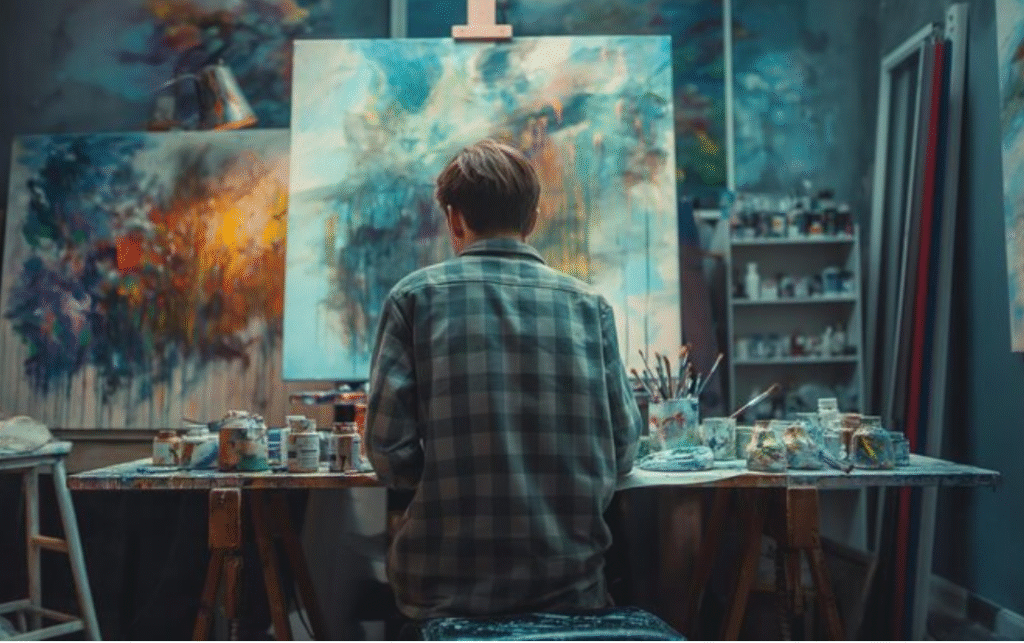
For V.S. Gaitonde, quiet was a way of life rather than a tactic. The Indian abstract painter was a reclusive and contemplative individual who shunned the turmoil of words and consumerism. Instead, he liked the silent company of brushstroke and thinking. Gaitonde’s artwork is layered with undetectable depth, with each stroke appearing to be taken from the fabric of silence. His paintings are often influenced by Zen philosophy and old calligraphy. Instead of interpreting, his surfaces invite spectators to pause and take in the soft, very weightless shimmer. His legacy is not merely aesthetic; it is also reflective, especially in the context of South Asian art. Motion was reinvented by Gaitonde by making stillness the focus.
Artists and the Concept of Silence in Painting
| Artist | Style/Movement | Notable Concept | Quote or Legacy | Link for Reference |
|---|---|---|---|---|
| Mark Rothko | Abstract Expressionism | Silence as emotional truth | “Silence is so accurate.” | Mark Rothko – WikiArt |
| V.S. Gaitonde | Indian Abstract | Painter of silence, introspective process | “Painting is a struggle, a silent mind.” | V.S. Gaitonde – MoMA |
| Agnes Martin | Minimalism | Silence through repetition and line | Zen and Taoist influence, meditative grids | Agnes Martin – WikiArt |
| Sophie (artist) | Mixed Media | Deaf painter exploring tactile silence | “The silence only she could hear” | Sophie’s Story – Facebook |
Another luminary who gave minimalism a whole new vitality was Agnes Martin, whose name is remarkably close to quiet itself. Her works are reminiscent of what one could envision if wind could sketch, with delicate repetition and pastel grids. Having been influenced by Zen Buddhism and Taoism, she refused to be categorized as either realist or abstract. Martin instead depicted what she referred to as “innocence”—an emotional purity that could only be shown by self-control. Her pieces demand presence and are quite successful at slowing down even the most harried observer. Her paintings don’t compete in a noisy gallery. They patiently wait for you to be ready.
Martin’s work contains silence, but it’s not empty. It’s space—space for air, for breathing, for thinking. Her methodical reduction of form has been especially helpful in recent decades in a culture that is becoming more and more noisy. These days, young painters return to Martin’s methods in an attempt to recover her rhythm rather than to copy her lines. Modern artists who are investigating the idea that less really is more frequently reference her influence, which has significantly improved in recent retrospectives.
Sophie, a child painter who lost her hearing at a very young age, is one artist whose relationship to quiet is more concrete. Her essay “The Silence Only She Could Hear” is a revelation rather than merely an autobiography. Sophie investigates what is there in the absence of sound rather than what is absent through her tactile bond with her horse Lyra. Her painting defies accepted ideas of communication and expression since it is highly textured and emotionally complex. Her work provides a silent witness that speaks louder than many spoken words for audiences who are not familiar with the deaf experience. Her art is both poignant and revolutionary because of the emotional nuance she achieves without the use of auditory cues.
A remarkable thread comes to light when considering these diverse artists: silence is creative rather than passive. By removing the clutter, it makes room for a new type of conversation. Rothko used saturation to generate emotional gravity. Gaitonde layered ideas into form while working in visual whispers. With each syllable signifying a breath, Martin ushered the audience into an almost heavenly silence. A physical reality molded solely by silence was captured by Sophie.
These painters created an unconventional creative lexicon by carefully examining stillness. They have an impact on architecture, design, and even fashion in addition to gallery walls. In their mood boards, designers like Raf Simons and Phoebe Philo have referenced minimalist artists like Martin and Rothko, depending on their stark calmness to direct color and shape. The same aesthetic discipline has also influenced musicians, such as Ryuichi Sakamoto and Max Richter, who have created works with slow transitions and long breaks. The understanding of quiet across disciplines has significantly increased as a result of this cross-pollination—not as an emptiness, but as a presence.
The appeal of quiet became almost sacrosanct during the pandemic, as real places shuttered and digital noise increased. Social media sites and online galleries started highlighting pieces that inspired reflection, relaxation, or serenity. Instagram gave Martin’s pastels a new lease on life. In digital form, Rothko’s color blocks were reinterpreted, losing context but maintaining their emotional appeal. Long kept in private collections, Gaitonde’s works were reexamined by collectors who had just grown to appreciate his brilliant introspection.
Silence continues to be an accessible muse for nascent creators. No crowd, no studio, and no budget are needed. It can be found in the margin, the tension between lines, and the pause before a brushstroke. Additionally, it offers spectators a respite—a unique opportunity to interact with art that subtly demands presence rather than yelling for attention.

Ring Chime — Enhanced audio for real-time alerts you can hear from anywhere, easy plug-in setup, simple wifi & Bluetooth connectivity, sleek design, White
IDR 628,070.50 (as of June 10, 2026 01:16 GMT +00:00 - More infoProduct prices and availability are accurate as of the date/time indicated and are subject to change. Any price and availability information displayed on [relevant Amazon Site(s), as applicable] at the time of purchase will apply to the purchase of this product.)
Ring Outdoor Cam (Stick Up Cam), Weather-resistant home or business security camera, outdoor ready, Live View, Color Night Vision, Two-Way Talk, motion alerts, Works with Alexa, White
IDR 717,820.50 (as of June 10, 2026 01:16 GMT +00:00 - More infoProduct prices and availability are accurate as of the date/time indicated and are subject to change. Any price and availability information displayed on [relevant Amazon Site(s), as applicable] at the time of purchase will apply to the purchase of this product.)
Amazon Fire TV Stick HD, free and live TV, Alexa Voice Remote, smart home controls, HD streaming
IDR 628,070.50 (as of June 10, 2026 01:16 GMT +00:00 - More infoProduct prices and availability are accurate as of the date/time indicated and are subject to change. Any price and availability information displayed on [relevant Amazon Site(s), as applicable] at the time of purchase will apply to the purchase of this product.)
Ring Indoor Cam, Home or business security in 1080p HD video, White
IDR 897,320.50 (as of June 10, 2026 01:16 GMT +00:00 - More infoProduct prices and availability are accurate as of the date/time indicated and are subject to change. Any price and availability information displayed on [relevant Amazon Site(s), as applicable] at the time of purchase will apply to the purchase of this product.)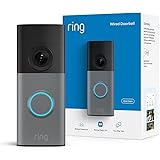
Ring Wired Doorbell (newest model), Wide-Angle Retinal 2K, up to 6x Enhanced Zoom, pair with Alexa or Ring Chime for in-home alerts, Speckled Gray
IDR 1,435,820.50 (as of June 10, 2026 01:16 GMT +00:00 - More infoProduct prices and availability are accurate as of the date/time indicated and are subject to change. Any price and availability information displayed on [relevant Amazon Site(s), as applicable] at the time of purchase will apply to the purchase of this product.)
Ring Rechargeable Quick Release Battery Pack
IDR 596,658.00 (as of June 10, 2026 01:16 GMT +00:00 - More infoProduct prices and availability are accurate as of the date/time indicated and are subject to change. Any price and availability information displayed on [relevant Amazon Site(s), as applicable] at the time of purchase will apply to the purchase of this product.)
blink plus ai plan with monthly auto-renewal
IDR 358,820.50 (as of June 10, 2026 01:16 GMT +00:00 - More infoProduct prices and availability are accurate as of the date/time indicated and are subject to change. Any price and availability information displayed on [relevant Amazon Site(s), as applicable] at the time of purchase will apply to the purchase of this product.)
Amazon Fire TV Stick HD (newest model), free & live TV, Alexa Voice Remote, powered by the TV, effortless setup, find shows faster with Alexa+
IDR 628,070.50 (as of June 10, 2026 01:16 GMT +00:00 - More infoProduct prices and availability are accurate as of the date/time indicated and are subject to change. Any price and availability information displayed on [relevant Amazon Site(s), as applicable] at the time of purchase will apply to the purchase of this product.)
Amazon Fire TV Stick 4K Plus (newest model) with AI-powered Fire TV Search, Wi-Fi 6, stream hundreds of thousands of movies and shows, free & live TV, find shows faster with Alexa+
IDR 897,320.50 (as of June 10, 2026 01:16 GMT +00:00 - More infoProduct prices and availability are accurate as of the date/time indicated and are subject to change. Any price and availability information displayed on [relevant Amazon Site(s), as applicable] at the time of purchase will apply to the purchase of this product.)