
When despair begins to whisper, hope knocks on the door. It is a deliberate redirection, a conviction that something better can still be shaped, rather than an escape route. Hope becomes that unexpected engine that sustains effort and significance, especially when reason alone is unable to construct a bridge. It is by no means a passive decision; rather, it is a fierce one that is made repeatedly, particularly by people who have witnessed the destructive power of disorder.
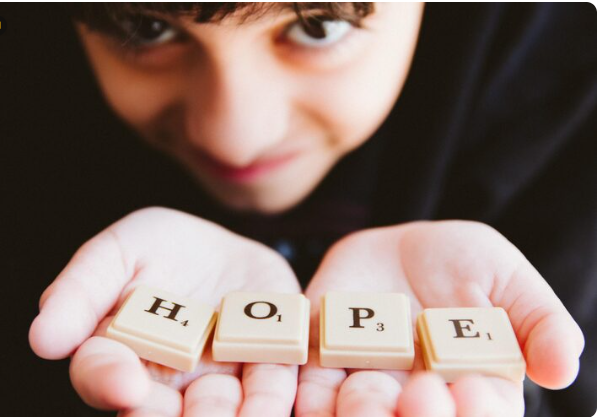
This concept has gained greater traction in recent days. A remarkably similar emotion permeates everything from nurses battling burnout in hospitals to climate activists lining up at international conferences: hope isn’t a luxury. It serves as the glue that holds goals and movement together. Hope maintained students logging into shaky virtual courses, volunteers delivering food, and nurses on shifts during the pandemic, when entire communities teetered on the edge of collapse.
| Aspect | Details |
|---|---|
| Theme | The psychological and societal value of hope |
| Key Argument | Hope is a strategic, courageous force—not naive or passive |
| Emotional Framing | Hope as moral resistance, resilience, and actionable mindset |
| Cultural Relevance | Tied to mental health, activism, recovery, and leadership narratives |
| Connection with Public Figures | Michelle Obama, Viktor Frankl, Amanda Gorman, and Brené Brown often emphasize hope as a guiding value |
| Notable Reference |
Michelle Obama has set an example of this type of resilient hope throughout the last ten years. Her talks focus more on perseverance than comfort. “When they go low, we go high” was a tactic, not just a catchphrase. It takes strength to choose integrity when it’s easy to be angry. And fuel is necessary for strength. That fuel is hope. It requires us to see past the issue and envision a higher level of accomplishment than we have attained thus far.
Psychiatrist and Holocaust survivor Viktor Frankl famously stated that people with a purpose in life could endure nearly any hardship. His understanding, developed under unimaginable pressure, serves as the foundation for the claim that hope is a very dependable power. Frankl’s insights are still very applicable in trauma therapy today, especially for those reestablishing their lives after experiencing loss.
Teachers have introduced this way of thinking into public schools through strategic collaborations. Dropout rates in underprivileged communities have been considerably lowered by hope-based curriculum models. By placing a strong emphasis on goal-setting, agency, and outcome visualization, students are inspired to view themselves as progressing rather than stagnant.
For good cause, Amanda Gorman’s inauguration poetry dominated social media. She did not deny gloom or division. “There is always light, if only we’re brave enough to see it,” she said instead. That statement is powerful because it views hope as a matter of courage rather than faith. It serves as a reminder that having a vision can be difficult, but it can still be chosen. Gorman, who was just in her twenties, succeeded in making hope both urgent and personal, something that decades of political speeches frequently fail to do.
Researchers in mental health have demonstrated through the use of advanced analytics that hopeful people recover more quickly, find more innovative solutions to issues, and stay dedicated to long-term transformation. It has nothing to do with poisonous positivity. It has to do with concentration. A hopeful individual studies the mountain and sets off on the ascent with a purpose rather than ignoring it. Hope is a powerful tool for shifting focus from the broken to the possibility.
During the pandemic, people with a feeling of purpose and momentum fared better than those with the most knowledge. Those who adhered to a positive framework, even to a small extent, reported much better coping outcomes when social isolation reduced routines and distorted timelines. This illustrates how hope can serve as an emotional support system.
Hope becomes operational in the setting of burnout, especially in the nonprofit and journalistic sectors. Desperate fundraising efforts frequently fail. However, those that are based on attainable transformation and an inspiring vision yield outcomes. Activism is no different. More support is mobilized by organizers who provide a roadmap, even if it is fraught with uncertainty, than by those who only record loss.
Belief in their product is more than just pitch material for early-stage founders. It is the lifeblood of their concept till it is validated by the market. At first, Elon Musk’s foray into electric automobiles was motivated more by his reluctance to accept limitations than by practicality. His dream, which was especially creative and consistently contentious, attracted talent, money, and detractors equally.
Many humanitarian groups have grown their donor bases much more quickly than others that only rely on statistics by combining hope-driven marketing with cultural storytelling. When a narrative feels authentic, it succeeds. And optimism feels genuine when it is enshrined in a personal narrative. It awakens an enduring and age-old desire to connect, to uplift, to contribute.
Cynical opinions have acquired social currency since the advent of social media. But nihilism, not honesty, is what wears viewers out over time. Hope becomes not just subversive but also marketable in this environment. Authentically optimistic brands tend to do better than their pessimistic rivals. People’s desire to have faith in leaders, in reform, and in one another is becoming more widely acknowledged.
In that sense, Hope is quite adaptable. It works in Senate chambers and hospital rooms, as well as in old retirement homes and college residence halls. It doesn’t make things easier. However, it distorts the image such that difficulty isn’t the main focus. It makes room for healing, reconciliation, and even happiness.

Ring Solar Panel (2nd Generation), 4W for Outdoor Cam Plus, Outdoor Cam (Stick Up Cam), Stick Up Cam Pro, Spotlight Cam Plus, Spotlight Cam Pro - White
$59.99 (as of June 2, 2026 00:41 GMT +00:00 - More infoProduct prices and availability are accurate as of the date/time indicated and are subject to change. Any price and availability information displayed on [relevant Amazon Site(s), as applicable] at the time of purchase will apply to the purchase of this product.)
Amazon Echo Spot (newest model), Great for nightstands, offices and kitchens, Smart alarm clock, Designed for Alexa+, Black
$67.99 (as of June 2, 2026 00:41 GMT +00:00 - More infoProduct prices and availability are accurate as of the date/time indicated and are subject to change. Any price and availability information displayed on [relevant Amazon Site(s), as applicable] at the time of purchase will apply to the purchase of this product.)
Blink Video Doorbell – Head-to-toe HD view, two-year battery life, and simple setup. Sync Module Core included – System (Black)
$59.99 (as of June 2, 2026 00:41 GMT +00:00 - More infoProduct prices and availability are accurate as of the date/time indicated and are subject to change. Any price and availability information displayed on [relevant Amazon Site(s), as applicable] at the time of purchase will apply to the purchase of this product.)
Amazon eero 6 mesh wifi add-on extender - Add up to 1,500 sq. ft. of Wi-Fi 6 coverage. Required eero mesh wifi system not included
$79.99 (as of June 2, 2026 00:41 GMT +00:00 - More infoProduct prices and availability are accurate as of the date/time indicated and are subject to change. Any price and availability information displayed on [relevant Amazon Site(s), as applicable] at the time of purchase will apply to the purchase of this product.)
Alexa Emergency Assist Monthly (auto-renewal)
(as of June 2, 2026 00:41 GMT +00:00 - More infoProduct prices and availability are accurate as of the date/time indicated and are subject to change. Any price and availability information displayed on [relevant Amazon Site(s), as applicable] at the time of purchase will apply to the purchase of this product.)
Amazon eero 7 dual-band mesh Wi-Fi 7 router (newest model) - Supports internet plans up to 2.5 Gbps, Coverage up to 6,000 sq. ft., 3-pack
$349.99 (as of June 2, 2026 00:41 GMT +00:00 - More infoProduct prices and availability are accurate as of the date/time indicated and are subject to change. Any price and availability information displayed on [relevant Amazon Site(s), as applicable] at the time of purchase will apply to the purchase of this product.)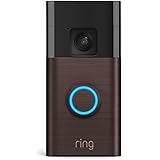
Ring Battery Doorbell, Home or business security with Head-to-Toe video, Live View with Two-Way Talk, and Motion Detection & Alerts, Venetian Bronze
$59.99 (as of June 2, 2026 00:41 GMT +00:00 - More infoProduct prices and availability are accurate as of the date/time indicated and are subject to change. Any price and availability information displayed on [relevant Amazon Site(s), as applicable] at the time of purchase will apply to the purchase of this product.)
Amazon Fire HD 10 tablet (newest model) built for relaxation, 10.1" vibrant Full HD screen, octa-core processor, 3 GB RAM, 64 GB, Lilac
$179.99 (as of June 2, 2026 00:41 GMT +00:00 - More infoProduct prices and availability are accurate as of the date/time indicated and are subject to change. Any price and availability information displayed on [relevant Amazon Site(s), as applicable] at the time of purchase will apply to the purchase of this product.)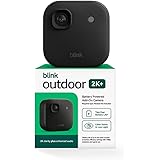
Blink Outdoor 2K+ (newest model) — Wireless smart security camera, 2K video resolution, enhanced audio, two-year battery. Required Sync Module not included — Add-On (Black)
$89.99 (as of June 2, 2026 00:41 GMT +00:00 - More infoProduct prices and availability are accurate as of the date/time indicated and are subject to change. Any price and availability information displayed on [relevant Amazon Site(s), as applicable] at the time of purchase will apply to the purchase of this product.)