

Rebecca Dunn doesn’t often speak in public, but when she does, her influence lasts long beyond the event. Her estimated $50 million to $100 million fortune is more than simply a number to add up; it is a testament to her strategic generosity and intellectual coherence, which have had a big impact on conservative grassroots infrastructure. Rebecca has used her family’s fortune through the Dunn Foundation to support organizations that reflect her beliefs, which she held in high regard along with the late podcaster and activist Charlie Kirk.
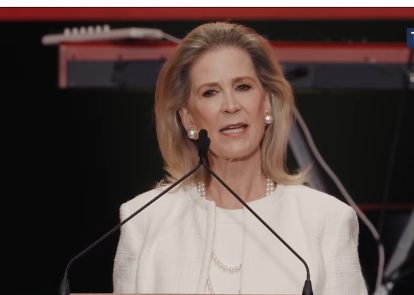
Dunn and Kirk had more than just a financial relationship. It was family. Rebecca said at Kirk’s memorial ceremony that he felt “like a son to me,” a statement that was widely shared in conservative circles. This emotional bond emphasized how deeply personal her gifts were and what her philanthropic goals were. She described how, at the age of 20, Kirk received the Dunn family’s first challenge award, which was $25,000 in two days. This opened the door for a series of ever larger donations. Turning Point USA gained a physical headquarters, hired personnel, and a broad nationwide chapter network as a result of that early faith, especially in crucial battleground states like Florida.
Rebecca Dunn – Profile Information
| Field | Information |
|---|---|
| Full Name | Rebecca Dunn |
| Estimated Net Worth | $50 million to $100 million (source: The Economic Times) |
| Profession | Philanthropist, Political Donor, Foundation Trustee |
| Affiliation | Dunn Foundation (formerly Dunn’s Foundation for the Advancement of Right Thinking) |
| Education | Florida State University |
| Public Role | Former Board Member at James Madison Institute; affiliated with FIRE |
| Key Associations | Charlie Kirk, Turning Point USA, Donald Trump, JD Vance |
| Spouse | Bill Dunn (founder of Dunn Capital Management) |
| Foundation Assets | Approx. $87 million (as per public estimates) |
| Reference |
Under Rebecca’s direction, the Dunn Foundation has become a silent but potent force for the expansion of right-leaning nonprofits. In contrast to prominent conservatives such as Tucker Carlson, Rebecca Dunn has kept a low profile, a strategy that has enabled her to work very effectively behind the scenes. Her affiliation with FIRE (Foundation for Individual Rights in Education) and her 18 years of service on boards such as the James Madison Institute demonstrate a persistent ideological commitment that extends beyond education to include limited government, personal liberty, and education.
Rebecca’s charitable giving lies at the nexus of intent and impact. Her approach is more traditional—slow, methodical, and firmly anchored in institutional capacity building—at a time when viral videos and celebrity endorsements frequently determine political currency. With Dunn Capital Management, her husband, Bill Dunn, established himself as a prominent figure in quantitative trading. It seems that the couple’s legacy was thoughtfully planned to protect wealth while also allocating it to what they believe to be the protection of American ideals.
The way Rebecca Dunn’s wealth transforms into ideological capital is what makes it so significant. The Dunn Foundation’s $87 million isn’t just sitting in an account. Throughout the United States, it is actively supporting student organizations, legal defense initiatives, talks, and fellowships. These are strategic expenditures meant to influence generational thinking, not random gifts.
A lineup of conservative heavyweights, including former President Donald Trump and Vice President JD Vance, attended her speech at Kirk’s memorial. This was more than simply a private moment; it was a symbolic handover, with Dunn emerging as a moral leader in that space as well as a supporter. The audience witnessed a dramatic difference when Erika Kirk openly forgave the individual who killed her husband—an emotionally charged, nearly spiritual element to what is sometimes perceived as a chilly political environment. That culture was cemented by Rebecca’s presence.
Rebecca’s plan provides a markedly different route as large Republican contributors reevaluate their post-Trump strategies in recent months. Quiet admiration has been shown for her long-term dedication to conservative intellectualism rather than reactionary political ploys. She stands for the traditional donors who value infrastructure over publicity, whereas Silicon Valley billionaires spend money to get recognition.
It’s crucial to remember that the precise amount of her personal net worth is yet unknown. This is mostly because she prefers to work through foundation processes and family trusts, and she receives very little public attention. However, there is no denying the importance of the overlap between her financial influence and her intellectual sphere. Particularly with such large endowments, foundations such as hers serve as permanent platforms that transcend news cycles and administrations.
It’s interesting to note that her involvement in communal initiatives, which include the arts, healthcare, and education, gives her identity a dimension beyond partisanship. Her charitable approach is influenced by a larger tradition of civic duty, despite the fact that her affinities are definitely conservative. She proudly mentions her Florida State University education, and her decades of participation in community projects indicates that she believes local action is the first step toward national influence.
Rebecca Dunn provides an unexpectedly transparent paradigm in the context of contemporary political philanthropy, where many are reassessing the effects of dark money and opaque funding sources. The goals, beneficiaries, and ideological inclinations of her foundation are all made explicit. A level of accountability that is frequently lacking in other donor ecosystems is made possible by this clarity. And that kind of candor is especially welcome in a time of political exhaustion and cynicism.
People like Rebecca Dunn are more than just benefactors to conservatives trying to restructure their long-term strategy; they are the architects of movements. Her riches is only one aspect of her net worth; another is leverage. Furthermore, she is an outlier worth researching because she decides to use it for university activism, student education, and think tanks rather than opulent events or personal branding.

Ring Indoor Cam Plus (newest model), Home or business security, Retinal 2K for crisp, true-to-life video quality, 4x Enhanced Zoom, Low-Light Sight, White
$59.99 (as of June 2, 2026 00:41 GMT +00:00 - More infoProduct prices and availability are accurate as of the date/time indicated and are subject to change. Any price and availability information displayed on [relevant Amazon Site(s), as applicable] at the time of purchase will apply to the purchase of this product.)
INSIGNIA 32" Class F20 Series LED HD Smart Fire TV, Voice Remote with Alexa, Free & Live TV
$79.99 (as of June 2, 2026 00:41 GMT +00:00 - More infoProduct prices and availability are accurate as of the date/time indicated and are subject to change. Any price and availability information displayed on [relevant Amazon Site(s), as applicable] at the time of purchase will apply to the purchase of this product.)
Ring Wired Doorbell Pro (newest model), Home or business security, Retinal 4K with wide-angle video, 10x Enhanced Zoom, and Low-Light Sight, Deep Silver
$249.99 (as of June 2, 2026 00:41 GMT +00:00 - More infoProduct prices and availability are accurate as of the date/time indicated and are subject to change. Any price and availability information displayed on [relevant Amazon Site(s), as applicable] at the time of purchase will apply to the purchase of this product.)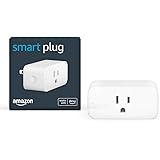
Amazon Smart Plug, Works with Alexa, Simple Setup, Endless Possibilities
$23.74 (as of June 2, 2026 00:41 GMT +00:00 - More infoProduct prices and availability are accurate as of the date/time indicated and are subject to change. Any price and availability information displayed on [relevant Amazon Site(s), as applicable] at the time of purchase will apply to the purchase of this product.)
blink plus ai plan with monthly auto-renewal
(as of June 2, 2026 00:41 GMT +00:00 - More infoProduct prices and availability are accurate as of the date/time indicated and are subject to change. Any price and availability information displayed on [relevant Amazon Site(s), as applicable] at the time of purchase will apply to the purchase of this product.)
Ring Pan-Tilt Indoor Cam (newest model), See all around your home or business with 360° pan coverage, HD video, plus Two-Way Talk, White
$59.99 (as of June 2, 2026 00:41 GMT +00:00 - More infoProduct prices and availability are accurate as of the date/time indicated and are subject to change. Any price and availability information displayed on [relevant Amazon Site(s), as applicable] at the time of purchase will apply to the purchase of this product.)
Amazon Kindle 16 GB (newest model) - Lightest and most compact Kindle, now with faster page turns, and higher contrast ratio, for an enhanced reading experience - Matcha
$109.99 (as of June 2, 2026 00:41 GMT +00:00 - More infoProduct prices and availability are accurate as of the date/time indicated and are subject to change. Any price and availability information displayed on [relevant Amazon Site(s), as applicable] at the time of purchase will apply to the purchase of this product.)
Amazon Fire TV Stick 4K Max streaming device, with AI-powered Fire TV Search, supports Wi-Fi 6E, free & live TV without cable or satellite, find shows faster with Alexa+
$33.99 (as of June 2, 2026 00:41 GMT +00:00 - More infoProduct prices and availability are accurate as of the date/time indicated and are subject to change. Any price and availability information displayed on [relevant Amazon Site(s), as applicable] at the time of purchase will apply to the purchase of this product.)
blink plus plan with monthly auto-renewal
(as of June 2, 2026 00:41 GMT +00:00 - More infoProduct prices and availability are accurate as of the date/time indicated and are subject to change. Any price and availability information displayed on [relevant Amazon Site(s), as applicable] at the time of purchase will apply to the purchase of this product.)