

Zubimendi His height has recently become a contentious topic of conversation, in part because, although it seems normal on paper, his presence on the field feels much larger than that neat 1.81 meters indicates. I’ve seen supporters argue over whether his height affects his ability to manage midfield fights in recent days, and the discussion frequently ignores how much more successful his placement is when compared to players who are taller. I recall leaning slightly forward in my seat during a game at the Emirates last season when he skillfully changed his posture, directing Arsenal’s tempo with motions that were remarkably reminiscent of Sergio Busquets’ serene influence.
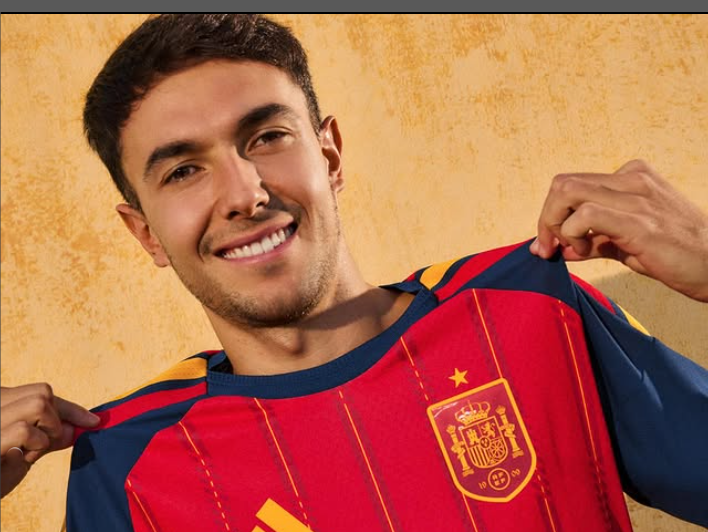
Martín Zubimendi has always known that a defensive midfielder’s height is not enough to characterize them, particularly one whose duties depend on anticipating, reading space, and managing transitions with extreme efficiency. Instead of depending on physical force or reach, he frequently arrives at the proper time by using his remarkably acute awareness of passing angles. as colleagues talk about him, they frequently emphasize his ability to show up just as pressure starts to build, simplifying the situation and allowing others to move forward with assurance. Even though he is not as tall as towering midfielders like Rodri, his influence has grown with each game and has significantly improved over the years.
| Category | Information |
|---|---|
| Full Name | Martín Zubimendi Ibáñez |
| Date of Birth | 2 February 1999 |
| Birthplace | San Sebastián, Spain |
| Height | 1.81 m (5 ft 11 in) |
| Age | 26 |
| Current Club | Arsenal FC |
| Former Club | Real Sociedad |
| Position | Defensive Midfielder |
| National Team | Spain |
| Shirt Number | 36 |
| Key Achievements | UEFA Euro 2024 Winner, 2025 Nations League Winner, Copa del Rey 2019–20 |
| Reference Link |
Zubimendi managed his surprise senior debut with poise that seemed above his years when Spain’s under-21 team took the field for an emergency friendly during the pandemic after Sergio Busquets’ unplanned isolation. That evening provided a glimpse of how players frequently exhibit their genuine selves when faced with sudden pressure. He was steady, composed, and especially creative in his interpretation of the space between sentences. When he came off the bench against Croatia and Albania, it felt like he had been carrying this duty for a lot longer than the stat sheets indicate. His reputation had grown quickly since the start of Euro 2024 as Spain swept through the stages.
In the last ten years, midfielders have become more defined by their cognitive speed rather than their physical profiles, and Zubimendi Height aptly embodies this change. He can stay balanced, flexible, and extremely adaptable thanks to his 1.81-meter height, especially when negotiating the narrow passageways that aggressive pressing teams generate. Many spectators fail to notice how he twists his body to allow opponents to slide by him or lowers his center of gravity to absorb collision. From the stands, this appears to be nearly choreographed, with each turn having a specific purpose. It made me think of David Silva, who was able to turn physical limitations into tactical advantages by merely anticipating the weight shift of larger defenders.
Through tactical alignment with Real Sociedad’s academy philosophy and strategic connections, Zubimendi became known as the type of midfielder who subtly but significantly improves a team’s structure. At Sociedad, coaches frequently emphasized the increasing convergence of his cerebral and technical development, pointing out that his comprehension of the game advanced more quickly than his physical development. Despite his youth, he performed with the composed assurance of someone much more experienced when he assisted the team in winning the Copa del Rey in 2020. People who kept a close eye on him felt that he would eventually sign with a major Premier League team.
In July 2025, Arsenal eventually acquired him, and as Mikel Arteta has been redefining the team’s midfield identity, the move had symbolic significance. When Arteta talked about Zubimendi, it made me think of a craftsman explaining a rare instrument that isn’t particularly ostentatious but is incredibly strong and useful for precise work. Having a midfield player with consistently dependable decision-making becomes especially helpful for medium-sized teams handling fixture congestion. Arteta was looking for someone who could combine offensive and defensive phases without being ostentatious, and Zubimendi Height’s intelligence was more important to the club’s decision than his height.
Arsenal greatly decreased their susceptibility during transitions by incorporating Zubimendi into the core of their system, particularly when rival counterattacks started to strain the squad. Receiving under pressure, delaying the opponent’s momentum, and making sure forward options remained open were all part of his task, which was straightforward in theory but difficult in practice. Such activities, in the context of high-intensity football, call for a mind that processes information far more quickly than opponents’ feet. And even in stressful situations, he maintains a level of poise that is remarkably evident.
In recent months, I’ve noticed parallels between Zubimendi and Xabi Alonso—not because they have similar backgrounds, but rather because they both have a natural sense of tempo. Alonso, who is now a highly regarded coach, commended midfielders who take the fear out of a game, and Zubimendi frequently exhibits that trait. His film turns into a subtly educational tutorial for young players learning the rigors of contemporary midfield responsibilities, demonstrating how patience can quell turmoil far more effectively than force.
When he played the entire game against Albania during Euro 2024, his impact made an impression on a number of analysts. They highlighted how he was always looking around, providing little havens of safety for teammates who needed to vent when things got tough. By taking these repeated steps, he made it possible for Spain to keep control even when rivals attempted to overthrow their system. This tendency persisted into the semifinal matchup with France, where he entered late but firmly maintained possession, demonstrating once more that his height never limited his influence.
In San Sebastián, I recall talking to a youth coach who referred to Zubimendi as “a midfielder who grows taller the longer he stays on the pitch.” That statement resonated with me because it encapsulates a subtle truth: some players grow not by size but by impact. Zubimendi’s height appears to be 1.81 meters on paper, but after watching him control play for ninety minutes, you notice a completely other scale that is characterized by structure, leadership, and a natural sense of rhythm.
It can be easy for supporters who are fixated on measurements to picture defensive midfielders as massive players who win duels. However, the modern midfield, which is changing quickly as analytics change coaching, rewards players who translate intelligence into presence. Through the use of sophisticated pattern recognition and tactical awareness, Zubimendi is able to anticipate moves far more quickly than many opponents who are physically larger. And that defines who controls a game more than centimeters.

Amazon Kindle Case, Thin and Lightweight, Foldable Protective Cover - Fabric
$22.16 (as of June 2, 2026 00:41 GMT +00:00 - More infoProduct prices and availability are accurate as of the date/time indicated and are subject to change. Any price and availability information displayed on [relevant Amazon Site(s), as applicable] at the time of purchase will apply to the purchase of this product.)
Amazon Fire TV Stick HD, free and live TV, Alexa Voice Remote, smart home controls, HD streaming
$34.99 (as of June 2, 2026 00:41 GMT +00:00 - More infoProduct prices and availability are accurate as of the date/time indicated and are subject to change. Any price and availability information displayed on [relevant Amazon Site(s), as applicable] at the time of purchase will apply to the purchase of this product.)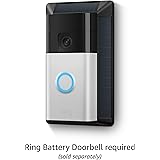
Ring Solar Charger for Battery Doorbell (1st Gen)
$47.02 (as of June 2, 2026 00:41 GMT +00:00 - More infoProduct prices and availability are accurate as of the date/time indicated and are subject to change. Any price and availability information displayed on [relevant Amazon Site(s), as applicable] at the time of purchase will apply to the purchase of this product.)
Amazon Echo Show 11 (newest model), Vibrant Full-HD 11" display with more viewing area and spatial audio, Designed for Alexa+, Graphite
$219.99 (as of June 2, 2026 00:41 GMT +00:00 - More infoProduct prices and availability are accurate as of the date/time indicated and are subject to change. Any price and availability information displayed on [relevant Amazon Site(s), as applicable] at the time of purchase will apply to the purchase of this product.)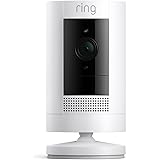
Ring Outdoor Cam (Stick Up Cam), Weather-resistant home or business security camera, outdoor ready, Live View, Color Night Vision, Two-Way Talk, motion alerts, Works with Alexa, White
$39.99 (as of June 2, 2026 00:41 GMT +00:00 - More infoProduct prices and availability are accurate as of the date/time indicated and are subject to change. Any price and availability information displayed on [relevant Amazon Site(s), as applicable] at the time of purchase will apply to the purchase of this product.)
Made for Amazon SanDisk 128GB microSD Memory Card for Fire Tablets and Fire -TV
$22.98 (as of June 2, 2026 00:41 GMT +00:00 - More infoProduct prices and availability are accurate as of the date/time indicated and are subject to change. Any price and availability information displayed on [relevant Amazon Site(s), as applicable] at the time of purchase will apply to the purchase of this product.)
Ring Solar Panel (2nd Generation), 4W for Outdoor Cam Plus, Outdoor Cam (Stick Up Cam), Stick Up Cam Pro, Spotlight Cam Plus, Spotlight Cam Pro - White
$59.99 (as of June 2, 2026 00:41 GMT +00:00 - More infoProduct prices and availability are accurate as of the date/time indicated and are subject to change. Any price and availability information displayed on [relevant Amazon Site(s), as applicable] at the time of purchase will apply to the purchase of this product.)
Amazon Echo Dot Max (newest model), Alexa speaker with room-filling sound and nearly 3x bass, Great for living rooms and medium-sized spaces, Designed for Alexa+, Graphite
$99.99 (as of June 2, 2026 00:41 GMT +00:00 - More infoProduct prices and availability are accurate as of the date/time indicated and are subject to change. Any price and availability information displayed on [relevant Amazon Site(s), as applicable] at the time of purchase will apply to the purchase of this product.)
Blink Video Doorbell – Head-to-toe HD view, two-year battery life, and simple setup. Sync Module Core included – System (Black)
$59.99 (as of June 2, 2026 00:41 GMT +00:00 - More infoProduct prices and availability are accurate as of the date/time indicated and are subject to change. Any price and availability information displayed on [relevant Amazon Site(s), as applicable] at the time of purchase will apply to the purchase of this product.)