
With a current estimated net worth of $27.5 billion, Peter Thiel exemplifies the extraordinary journey of a visionary who turned outlandish concepts into enduring impact. His path from co-founding PayPal to influencing businesses like Palantir and Founders Fund is indicative of a mindset based on accuracy, foresight, and vision. Thiel’s wealth was gained by making exceptionally wise decisions that foresaw future markets, not by chance.

Thiel’s early experiences, which included being born in Frankfurt and growing up on different continents, influenced his capacity to adapt. After a while, his family moved to California, where his keen intelligence became apparent. He studied philosophy at Stanford before graduating with a legal degree, which prepared him to confront authority and raise doubts about presumptions. He established The Stanford Review there, a journal that reflected his mistrust of groupthink and intellectual independence.
Peter Thiel – Personal and Professional Overview
| Category | Details |
|---|---|
| Full Name | Peter Andreas Thiel |
| Date of Birth | October 11, 1967 |
| Birthplace | Frankfurt, West Germany |
| Citizenship | Germany, United States, New Zealand |
| Education | Stanford University (BA, JD) |
| Occupation | Entrepreneur, Venture Capitalist, Political Activist |
| Known For | Co-founding PayPal, Palantir Technologies, and Founders Fund |
| Major Investments | Facebook, SpaceX, Stripe |
| Estimated Net Worth (2025) | $27.5 Billion (Forbes) |
| Marital Status | Married to Matt Danzeisen (since 2017) |
| Political Affiliation | Republican |
| Reference Source |
Thiel had brief spells in banking and law before realizing that traditional professions could not fulfill his aspirations. He began his investment career in 1996 when he founded Thiel Capital Management. He co-founded PayPal with Max Levchin and Luke Nosek just two years later. What began as a tiny payments business grew into a digital banking revolution. PayPal expanded quickly by emphasizing safe, easy transactions, and in 2002 it was acquired by eBay for $1.5 billion. In addition to making Thiel extremely wealthy, the deal established the “PayPal Mafia,” a group of businesspeople that included Reid Hoffman and Elon Musk that would change technology in the ensuing decades.
With his subsequent business endeavor, Thiel’s keen ability to spot scalable innovation was made abundantly evident. He was a co-founder of Palantir Technologies in 2003, a data analytics firm that would become essential to both businesses and governments. The capacity of Palantir’s software to evaluate intricate datasets for security and intelligence objectives was very novel. As chairman, Thiel managed its growth from a small startup to a multibillion-dollar company, showcasing his ability to see what others missed.
Thiel co-founded the venture capital firm Founders Fund in 2005, which made investments in what he referred to as “the hardest problems in technology.” Under his direction, Founders Fund started investing early in businesses that would go on to establish whole industries, such as SpaceX and Stripe. Thiel’s $500,000 investment in Facebook in 2004 became one of the most lucrative ventures in Silicon Valley history. Thiel’s early investment in Facebook was valued at well over $1 billion when the company went public, establishing his reputation as an investor with almost prophetic insight.
Thiel’s meticulous approach is what makes his financial empire so intriguing. He frequently highlights that monopolies—businesses that dominate their industries by being essentially unique—are the source of huge fortunes rather than competition. His book Zero to One effectively articulated this idea, which has since evolved into a sort of manifesto for contemporary businesspeople. He advises startups to concentrate on creating something completely original rather than outperforming competitors. Younger innovators’ perspectives on disruption and value creation have significantly improved as a result of his speech.
Thiel’s investments demonstrate a tendency to have faith in audacious concepts. He supports innovations that have the potential to permanently alter society, such as biotechnology and artificial intelligence. But he never takes a careless approach. He strikes a balance between logic and risk, frequently making investments only after thorough research. In the tumultuous world of tech finance, his unique blend of intelligence and intuition has made him a very resilient individual.
Thiel is unique in the political arena. He is a fervent libertarian and conservative donor, in contrast to many of his Silicon Valley contemporaries who lean liberal. Thiel has continuously defended his decisions as manifestations of free thought rather than ideology, despite the fact that his support for individuals such as Donald Trump incited contentious discussions. His occasionally controversial and frequently misinterpreted views on capitalism and democracy demonstrate his conviction that creativity necessitates a break from uniformity.
His legacy is further enhanced by his philanthropy. He provides funding for initiatives that question conventional routes to achievement through the Thiel Foundation. His Thiel Fellowship is well-known for awarding $100,000 to young individuals who choose to pursue business ventures instead of attending college. It’s a bold concept that has produced new firms with remarkable success. The way society views education and ambition is still influenced by Thiel’s view that education should foster independence rather than compliance.
Thiel’s wealth has grown over the last ten years as a result of both savvy holdings and well-timed exits. His investments in Palantir, Founders Fund, and other private businesses guarantee a consistent increase in his wealth. He expanded into the real estate market as well, purchasing opulent homes in Miami and Los Angeles. More than just a transfer, his 2018 departure from Silicon Valley was a statement of his disapproval of the area he had once contributed to defining. Referring to it as a “one-party state,” Thiel moved to pursue business endeavors in what he saw as more intellectually diverse settings.
Even though Thiel achieved great success, his tale is not one of continuous rise. Predicting economic patterns helped his hedge fund, Clarium Capital, flourish at first, but when markets changed, it struggled. Rather than withdrawing, Thiel changed course, transforming failure lessons into resilience tactics. This flexibility is still one of his best qualities. He frequently reminds business owners that experimenting is necessary for advancement and that, when rationally managed, risk can be a tool for learning rather than destruction.
Thiel’s influence extends beyond the realm of finance. His theories have impacted the ways in which technology engages with power, privacy, and politics. Conversations about influence and ethics were rekindled when he covertly funded Hulk Hogan’s lawsuit against Gawker, following the site’s years-long outing of him. Supporters referred to it as justice, while critics labeled it retaliation. Thiel’s complicated relationship with power and principle is highlighted by his own description of it as protecting privacy against careless journalism.
These days, Peter Thiel’s net worth reflects his intellectual empire rather than merely his assets. He stands out among billionaires for his ability to combine philosophy and profit, as well as audacity and reason. Every business he works with has a mission that goes beyond making money. Thiel’s influence is remarkably constant, whether he is supporting rockets, altering data intelligence, or coaching unconventional thinkers: encouraging society to think more deeply, act more intelligently, and push boundaries.

blink plus ai plan with monthly auto-renewal
$19.99 (as of March 30, 2026 21:00 GMT +00:00 - More infoProduct prices and availability are accurate as of the date/time indicated and are subject to change. Any price and availability information displayed on [relevant Amazon Site(s), as applicable] at the time of purchase will apply to the purchase of this product.)
Ring Indoor Cam Plus (newest model), Home or business security, Retinal 2K for crisp, true-to-life video quality, 4x Enhanced Zoom, Low-Light Sight, White
$39.99 (as of March 30, 2026 21:00 GMT +00:00 - More infoProduct prices and availability are accurate as of the date/time indicated and are subject to change. Any price and availability information displayed on [relevant Amazon Site(s), as applicable] at the time of purchase will apply to the purchase of this product.)
Amazon Kindle Paperwhite 16GB (newest model) – 20% faster, with new 7" glare-free display and weeks of battery life – Black
$118.79 (as of March 30, 2026 21:00 GMT +00:00 - More infoProduct prices and availability are accurate as of the date/time indicated and are subject to change. Any price and availability information displayed on [relevant Amazon Site(s), as applicable] at the time of purchase will apply to the purchase of this product.)
Ring Rechargeable Quick Release Battery Pack
$32.91 (as of March 30, 2026 21:00 GMT +00:00 - More infoProduct prices and availability are accurate as of the date/time indicated and are subject to change. Any price and availability information displayed on [relevant Amazon Site(s), as applicable] at the time of purchase will apply to the purchase of this product.)
INSIGNIA 55-inch Class F50 Series LED 4K UHD Smart Fire TV with Alexa Voice Remote (NS-55F501NA26)
$179.98 (as of March 30, 2026 21:00 GMT +00:00 - More infoProduct prices and availability are accurate as of the date/time indicated and are subject to change. Any price and availability information displayed on [relevant Amazon Site(s), as applicable] at the time of purchase will apply to the purchase of this product.)
Amazon Fire TV Stick 4K Plus (newest model) with AI-powered Fire TV Search, Wi-Fi 6, stream over 1.8 million movies and shows, free & live TV, find shows faster with Alexa+
$24.99 (as of March 30, 2026 21:00 GMT +00:00 - More infoProduct prices and availability are accurate as of the date/time indicated and are subject to change. Any price and availability information displayed on [relevant Amazon Site(s), as applicable] at the time of purchase will apply to the purchase of this product.)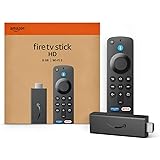
Amazon Fire TV Stick HD (newest model), free and live TV, Alexa Voice Remote, smart home controls, HD streaming
$16.99 (as of March 30, 2026 21:00 GMT +00:00 - More infoProduct prices and availability are accurate as of the date/time indicated and are subject to change. Any price and availability information displayed on [relevant Amazon Site(s), as applicable] at the time of purchase will apply to the purchase of this product.)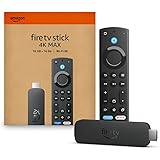
Amazon Fire TV Stick 4K Max streaming device, with AI-powered Fire TV Search, supports Wi-Fi 6E, free & live TV without cable or satellite, find shows faster with Alexa+
$34.99 (as of March 30, 2026 21:00 GMT +00:00 - More infoProduct prices and availability are accurate as of the date/time indicated and are subject to change. Any price and availability information displayed on [relevant Amazon Site(s), as applicable] at the time of purchase will apply to the purchase of this product.)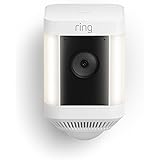
Ring Spotlight Cam Plus, Battery (newest model), Home or business security with HD video, Two-Way Talk, Color Night Vision, and Security Siren, White
$86.16 (as of March 30, 2026 21:00 GMT +00:00 - More infoProduct prices and availability are accurate as of the date/time indicated and are subject to change. Any price and availability information displayed on [relevant Amazon Site(s), as applicable] at the time of purchase will apply to the purchase of this product.)