

With an estimated net worth of $14 million, Steven Seagal is a man who transformed his mastery of martial arts into Hollywood stardom and then global renaissance. Seagal, who formerly demanded multimillion-dollar salaries, exemplifies the peaks of celebrity achievement as well as the erratic changes that accompany it.
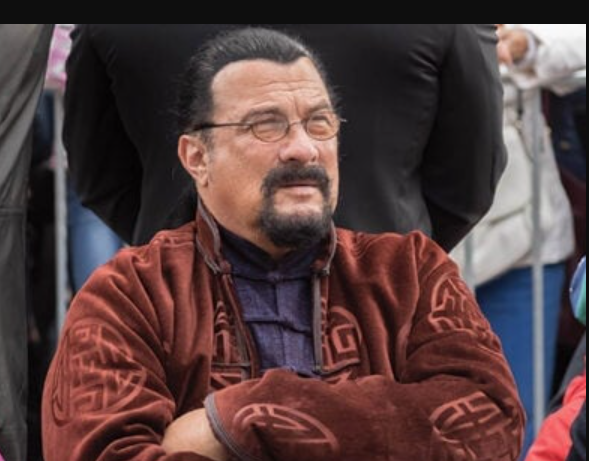
Seagal, who was reared in California after being born in Michigan, had a natural affinity for martial arts. His commitment was extraordinary; he practiced nonstop before relocating to Japan, where he was among the first Westerners to own a dojo. He gained appreciation from other Aikido practitioners for his serene yet strong style of training. Fate stepped in when he founded a martial arts school in New Mexico after returning to the United States.
Steven Seagal – Personal and Professional Overview
| Category | Details |
|---|---|
| Full Name | Steven Frederic Seagal |
| Date of Birth | April 10, 1952 |
| Birthplace | Lansing, Michigan, United States |
| Nationality | American, Russian, Serbian |
| Occupation | Actor, Martial Artist, Producer, Screenwriter, Musician |
| Years Active | 1982 – Present |
| Notable Films | Above the Law (1988), Under Siege (1992), On Deadly Ground (1994), Exit Wounds (2001) |
| Estimated Net Worth (2025) | $14 Million |
| Major Income Sources | Acting, Producing, Martial Arts Schools, Music |
| Spouse | Erdenetuya Batsukh (m. 2009) |
| Residence | United States and Russia |
| Reference | Celebrity Net Worth – Steven Seagal |
After teaching self-defense, Seagal met Hollywood agent Michael Ovitz, who recognized his potential as a movie action hero right away. Following their meeting, Seagal made his movie debut in Above the Law (1988), which exposed viewers to his unique style as an action actor who moved with quiet confidence and accuracy in addition to fighting. As a result of the movie’s popularity, Seagal became well-known and began a string of successful box office releases that would shape his career in the 1990s.
Seagal became a worldwide star thanks to movies like Hard to Kill (1990), Marked for Death (1990), and Under Siege (1992). He made an incredible $15 million for On Deadly Ground and $20 million for The Glimmer Man at his height. In addition to their physical brilliance, these movies displayed a form of spiritual heroism that is uncommon in Hollywood action movies. His fictional heroes frequently battled corruption with a moral ferocity that struck a deep chord with viewers at the time.
In addition to his acting career, Seagal showed a keen business acumen and inventiveness. He assumed positions as screenwriter and producer, which allowed him creative and financial autonomy. His career benefited greatly from this decision, which enabled him to receive large back-end earnings from his movies. However, his style of direct, stoic action started to lose its appeal as the industry changed. His style was marginalized by the rise of blockbusters with strong special effects, which resulted in a constant flow of direct-to-video releases.
Seagal was a different kind of celebrity by the early 2000s; he was still enthusiastic and busy, but he was doing things his way. In addition to earning him $6.5 million, his 2001 movie Exit Wounds marked the end of his Hollywood supremacy. Rather than peacefully disappearing, he diversified. After turning to music, he surprised fans by releasing two blues albums, Mojo Priest (2006) and Songs from the Crystal Cave (2005). The recordings showed a heartfelt performer who genuinely loved rhythm and narrative. Despite not reaching the top of the charts, the songs revealed an extraordinarily diverse side of the actor that few had anticipated.
An additional phase of Seagal’s life that combined diplomacy, art, and ideology was his relationship with Russia. President Vladimir Putin awarded Seagal Russian citizenship in 2016, and he enthusiastically accepted his new status. He positioned himself as a link between countries by taking part in charity endeavors, musical performances, and cultural activities. However, opinions on his relationship with Russia have been divided; some see it as a political message, while others see it as a diplomatic gesture. But his ability to change and remake himself in other nations is extraordinarily creative, especially for a celebrity who is largely recognized for his Hollywood background.
In terms of money, Seagal’s career is a story of incredible peaks and valleys. He made more than $50 million at his height from just five big-budget movies. His overall income during the 1990s surpassed $100 million when his producing credits and other endeavors were taken into account. But over time, a mix of tax problems, legal battles, and living expenses drastically diminished his wealth. Even still, his $14 million net worth now is a testament to his consistent success, something that few celebrities of his generation were able to maintain.
Seagal’s revenue sources are remarkably varied in comparison to many of his peers. In addition to movies, he still makes money from martial arts schools and instructional videos, particularly in Eastern Europe and Russia. Thousands of fans go to see him at worldwide conventions and Aikido exhibitions. Additionally, he has made money from endorsements and licensing agreements with entertainment and martial arts companies. His financial stability has significantly improved in recent years as a result of this planned combination of endeavors.
Seagal’s personal philosophy, which has its roots in Eastern discipline and spirituality, continues to be essential to who he is. He frequently discusses energy, balance, and respect—principles that inform both his art and way of life. These values have made him incredibly resilient in a field that frequently fires aged celebrities. Instead of striving for Hollywood acceptance, Seagal forged a career that embodies self-reliance and confidence.
His experience also reflects a more general change in the way that people interact with celebrities. The foundation of Seagal’s success, like that of his contemporaries Sylvester Stallone and Jean-Claude Van Damme, was physical authenticity—his actual martial arts training, not computer-generated feats. That grounded reality feels more uncommon and, ironically, more precious in the modern era of synthetic effects. His kind of physical storytelling appeals to people who long for a time when action depended on strength rather than pixels and heroes were real people.
Seagal’s filmography has subtly grown in recent years, incorporating films such as Beyond the Law (2019) and Attrition (2018). Despite their small scale, these movies depict a man who is nonetheless passionate about what he does. He keeps up his creative control and refuses to go away by acting, producing, and writing. His followers are incredibly devoted, many of them grew up watching him rule the 1990s film industry.
Ring Spotlight Cam Plus, Battery (newest model), Home or business security with HD video, Two-Way Talk, Color Night Vision, and Security Siren, White
$86.16 (as of March 30, 2026 21:00 GMT +00:00 - More infoProduct prices and availability are accurate as of the date/time indicated and are subject to change. Any price and availability information displayed on [relevant Amazon Site(s), as applicable] at the time of purchase will apply to the purchase of this product.)
Amazon Echo Show 5 (newest model), Smart display, Designed for Alexa+, 2x the bass and clearer sound, Charcoal
$69.99 (as of March 30, 2026 21:00 GMT +00:00 - More infoProduct prices and availability are accurate as of the date/time indicated and are subject to change. Any price and availability information displayed on [relevant Amazon Site(s), as applicable] at the time of purchase will apply to the purchase of this product.)
Ring Floodlight Cam Wired Plus (newest model), Outdoor home or business security with motion-activated 1080p HD video and floodlights, White
$89.99 (as of March 30, 2026 21:00 GMT +00:00 - More infoProduct prices and availability are accurate as of the date/time indicated and are subject to change. Any price and availability information displayed on [relevant Amazon Site(s), as applicable] at the time of purchase will apply to the purchase of this product.)
blink plus plan with monthly auto-renewal
$11.99 (as of March 30, 2026 21:00 GMT +00:00 - More infoProduct prices and availability are accurate as of the date/time indicated and are subject to change. Any price and availability information displayed on [relevant Amazon Site(s), as applicable] at the time of purchase will apply to the purchase of this product.)
Ring Rechargeable Quick Release Battery Pack
$32.91 (as of March 30, 2026 21:00 GMT +00:00 - More infoProduct prices and availability are accurate as of the date/time indicated and are subject to change. Any price and availability information displayed on [relevant Amazon Site(s), as applicable] at the time of purchase will apply to the purchase of this product.)
blink plus ai plan with monthly auto-renewal
$19.99 (as of March 30, 2026 21:00 GMT +00:00 - More infoProduct prices and availability are accurate as of the date/time indicated and are subject to change. Any price and availability information displayed on [relevant Amazon Site(s), as applicable] at the time of purchase will apply to the purchase of this product.)
Amazon Kindle Paperwhite and Kindle Colorsoft Case, Lightweight and Water-Safe, Foldable Protective Cover - Fabric
$18.25 (as of March 30, 2026 21:00 GMT +00:00 - More infoProduct prices and availability are accurate as of the date/time indicated and are subject to change. Any price and availability information displayed on [relevant Amazon Site(s), as applicable] at the time of purchase will apply to the purchase of this product.)
Blink Video Doorbell (newest model) – Head-to-toe HD view, two-year battery life, and simple setup. Required Sync Module not included – Add-On (Black)
$22.49 (as of March 30, 2026 21:00 GMT +00:00 - More infoProduct prices and availability are accurate as of the date/time indicated and are subject to change. Any price and availability information displayed on [relevant Amazon Site(s), as applicable] at the time of purchase will apply to the purchase of this product.)
Ring Outdoor Cam Plus, Battery (newest model), Home or business security, Wide-Angle 2K Video with Ring Vision, Low-Light Sight for full-color night vision, Mount-Anywhere Versatility, White
$50.99 (as of March 30, 2026 21:00 GMT +00:00 - More infoProduct prices and availability are accurate as of the date/time indicated and are subject to change. Any price and availability information displayed on [relevant Amazon Site(s), as applicable] at the time of purchase will apply to the purchase of this product.)