

The moment a library replaces its quiet nooks with busy checkout lines is quite comparable to what happens when a university turns into a business. Even as people like the convenience, something precious feels subtly moved. Persuaded that financial stability offers stability to students, faculty, and the communities they serve, administrators have leaned more confidently on corporate logic in recent years. Many people haven’t noticed the change until little academic traditions start to feel a little commercial, such as when recruiting ads start to sound more like lifestyle ads than invitations to learn.

Because they are at the core of contemporary campus operations—almost like customers navigating a service environment designed to keep them interested, enrolled, and satisfied—students are the first to notice the change. Classroom buildings take on sleek designs suggestive of tech incubators, dining halls become visual exhibits, and gyms become wellness centers. During economic downturns, when families want confidence that their tuition money will be invested in long-term opportunities, these elements are especially helpful in attracting new applications. However, as these facilities grow, academic finances become more stretched, which creates conflict between administrative interests and educational values.
| Category | Details |
|---|---|
| Institution Type | Modern University Model (Business-Driven) |
| Funding Structure | Tuition revenue, private partnerships, government grants, corporate sponsorships |
| Governance Style | Executive-led administration with emphasis on efficiency and ROI metrics |
| Primary Objectives | Financial sustainability, competitive enrollment, employability outcomes |
| Key Features | Customer-style student services, commercial research ties, increased marketing activity |
| Market Influences | Industry partnerships, labor-market alignment, revenue-centric program design |
| Societal Impact | Rising tuition pressure, shifting academic freedom, evolving student expectations |
| Reference Link |
This trend was accelerated during the epidemic by remote learning, which compelled colleges to quickly implement business-style logistics. Students relied on customer service lines to fix necessary software, professors set up makeshift studio-like sets in living rooms, and administrators kept an eye on enrollment patterns with the zeal of marketers analyzing consumer data. As schools embraced digital infrastructures designed for scalability rather than intellectual investigation, the gap between traditional education and the new economic model was greatly narrowed. Some teachers opened up about feeling more like they were performing for an algorithm than building a classroom.
Executive leaders are persuading funders and legislators that degree programs have intrinsic, long-term worth by framing education as a recession-resistant asset similar to long-term investments in the face of financial volatility. During times of economic instability, when demand for higher education rises dramatically, this message is especially evident. Undergraduate enrollment skyrocketed during the 2008 crisis as people sought more credentials to compete for fewer open positions. It was a striking example of how education serves as a lifeboat in trying times, rescuing people before the labor market abandons them.
Universities optimize everything from course scheduling to dorm allocation by utilizing advanced analytics, which supports the notion that operational efficiency is a strategic priority rather than just an administrative decision. Automated reminders about assignments, bills, internship applications, and alumni gatherings are sent to students, resulting in a notification rhythm that is both very effective and often overwhelming. Recently, a sophomore revealed that her campus app “knew” her better than other counselors, anticipating her preferred electives before she had even looked at the course catalog.
Securing funding continues to be the largest challenge for university early-stage educational programs, especially when the curriculum does not properly match the demands of the market today. Because business, engineering, and health sciences are routinely favored by profitability criteria, departments in disciplines like philosophy, anthropology, or contemporary languages frequently feel defensive about their significance. Even academics with highly esteemed research careers occasionally talk about having to use enrollment figures to support their survival, as if scholarship should always demonstrate its commercial value.
Research culture is also changed by university commercialization, which results in a noticeably better pipeline of patents, new businesses, and corporate partnerships that offer financial gains and prestige. However, the impact of these collaborations can vary greatly, sometimes promoting academic independence and other times elevating the entire institution. Researchers that collaborate with large corporations may have access to state-of-the-art resources, but they must deal with difficult issues of ethical independence, secrecy, and intellectual property. The experience was recently described as “walking a line between curiosity and corporate discretion” by a scientist.
Administrators increase their presence in foreign markets by forming strategic alliances, hiring international students, and launching satellite programs that rival those of universities throughout the world. In addition to fostering varied learning communities, these initiatives heighten discussions over whether colleges should put more emphasis on foreign tuition income or cultural enrichment. The conflicting ideals coexist and shape campus identity in ways that are both exhilarating and sometimes unsettling.
Technology has changed the educational landscape by bringing a private-sector perspective to regular academic procedures and revolutionizing traditional learning. Faculty can act early with problematic students thanks to digital dashboards that track student engagement with surgical accuracy. These programs are incredibly successful at reducing dropout rates, but they also bring up sensitive issues of privacy and monitoring. While some students feel that their interest is being measured like data points in a marketing report, others value the individualized support.
Universities have had to reconsider how they provide value with the emergence of online degree marketplaces. Prospective students evaluate variables including career success, teacher satisfaction, and income growth, comparing programs in the same manner that consumers compare products. Particularly for first-generation students who see school as a transforming bridge toward stability, return on investment becomes a compelling selling point. Consequently, admissions teams place a greater emphasis on employability, sometimes to the detriment of the more profound intellectual experience that used to characterize academic life.
A university’s culture, policies, and the emotional climate of campus life are all altered when it turns into a corporation. A group of students acknowledged that they occasionally select classes based more on customer-style ratings than on real curiosity, while one professor talked about feeling like a “brand ambassador” after being asked to create promotional videos for social media. Nevertheless, in spite of these developments, many educators continue to cling to the idea that the real worth of education may be found in the small, unprofitable moments, such as a class discussion that refocuses a young person’s course, an unexpected research finding, or the encouragement of a mentor.

blink plus ai plan with monthly auto-renewal
$19.99 (as of March 30, 2026 21:00 GMT +00:00 - More infoProduct prices and availability are accurate as of the date/time indicated and are subject to change. Any price and availability information displayed on [relevant Amazon Site(s), as applicable] at the time of purchase will apply to the purchase of this product.)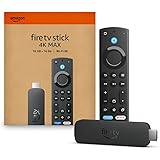
Amazon Fire TV Stick 4K Max streaming device, with AI-powered Fire TV Search, supports Wi-Fi 6E, free & live TV without cable or satellite, find shows faster with Alexa+
$34.99 (as of March 30, 2026 21:00 GMT +00:00 - More infoProduct prices and availability are accurate as of the date/time indicated and are subject to change. Any price and availability information displayed on [relevant Amazon Site(s), as applicable] at the time of purchase will apply to the purchase of this product.)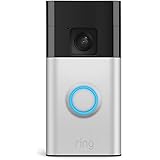
Ring Battery Doorbell, Home or business security with Head-to-Toe video, Live View with Two-Way Talk, and Motion Detection & Alerts, Satin Nickel
$59.99 (as of March 30, 2026 21:00 GMT +00:00 - More infoProduct prices and availability are accurate as of the date/time indicated and are subject to change. Any price and availability information displayed on [relevant Amazon Site(s), as applicable] at the time of purchase will apply to the purchase of this product.)
Amazon Kindle Paperwhite 16GB (newest model) – 20% faster, with new 7" glare-free display and weeks of battery life – Black
$118.79 (as of March 30, 2026 21:00 GMT +00:00 - More infoProduct prices and availability are accurate as of the date/time indicated and are subject to change. Any price and availability information displayed on [relevant Amazon Site(s), as applicable] at the time of purchase will apply to the purchase of this product.)
Blink Outdoor 4 – Wireless smart security camera, two-year battery life, two-way talk. Required Sync Module not included – Add-on camera
$37.99 (as of March 30, 2026 21:00 GMT +00:00 - More infoProduct prices and availability are accurate as of the date/time indicated and are subject to change. Any price and availability information displayed on [relevant Amazon Site(s), as applicable] at the time of purchase will apply to the purchase of this product.)
Amazon Fire 7 Kids tablet (newest model) ages 3-7. Top-selling 7" kids tablet on Amazon. Includes 6 months of ad-free and exclusive content, easy parental controls, 10-hr battery, 16 GB, Blue
$59.99 (as of March 30, 2026 21:00 GMT +00:00 - More infoProduct prices and availability are accurate as of the date/time indicated and are subject to change. Any price and availability information displayed on [relevant Amazon Site(s), as applicable] at the time of purchase will apply to the purchase of this product.)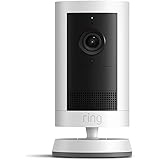
Ring Outdoor Cam Plus, Battery (newest model), Home or business security, Wide-Angle 2K Video with Ring Vision, Low-Light Sight for full-color night vision, Mount-Anywhere Versatility, White
$50.99 (as of March 30, 2026 21:00 GMT +00:00 - More infoProduct prices and availability are accurate as of the date/time indicated and are subject to change. Any price and availability information displayed on [relevant Amazon Site(s), as applicable] at the time of purchase will apply to the purchase of this product.)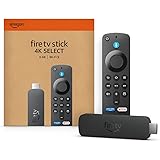
Amazon Fire TV Stick 4K Select (newest model), start streaming in 4K, AI-powered search, and free & live TV, find shows faster with Alexa+
$17.99 (as of March 30, 2026 21:00 GMT +00:00 - More infoProduct prices and availability are accurate as of the date/time indicated and are subject to change. Any price and availability information displayed on [relevant Amazon Site(s), as applicable] at the time of purchase will apply to the purchase of this product.)
Ring Indoor Cam, Home or business security in 1080p HD video, White
$34.99 (as of March 30, 2026 21:00 GMT +00:00 - More infoProduct prices and availability are accurate as of the date/time indicated and are subject to change. Any price and availability information displayed on [relevant Amazon Site(s), as applicable] at the time of purchase will apply to the purchase of this product.)